Wednesday, May 11, 2011

Syracuse Symphony Files for Chapter 7 Bankruptcy


Tuesday, May 10, the Syracuse Symphony officially filed for chapter 7 bankruptcy. The decision to file for bankruptcy was made by the symphony's board of trustees on April 3 and involved laying off all 61 core and 14 contract musicians. This would have been their 50th anniversary season.

Syracuse Symphony Orchestra: A Message from Paul Brooks, Interim Executive Director and Rocco Mangano, Chair, Board of Trustees, Syracuse Symphony Orchestra

Read more at Syracuse.com

Clarinet BBoard Donation Drive

Image: Simon Howden / FreeDigitalPhotos.net

The Clarinet BBoard is one of the biggest and most informative websites on the web when it comes to gaining knowledge about the clarinet. Whether you have questions about repertoire, playing, equipment, jobs, or almost anything else clarinet related, you are likely to find an answer here. Mark Charette is the great man behind this website and he is footing the bill for keeping it up. Ads help, but they are not enough to keep the site running. Please make a donation, even if it is just a dollar or two. It's simple, easy, and helps to keep this incredible and valuable website up and running.

Click HERE to go to the donation page

Tuesday, May 10, 2011

Minimum Salaries of US Orchestras

At one time or another many of us have wondered what orchestra members get paid. For this reason I have made the following chart. All of the information is from the International Conference of Symphony and Opera Musicians (ICSOM) and is based on the most recent information provided there. 


Monday, May 9, 2011

Steve Williamson named Principal Clarinet of the Chicago Symphony

UPDATE: 


It appears that the previous information was false. We have heard that Steve Williamson, currently co-principal of the Met, has been chosen as principal clarinet. The source of our info is the clarinet BBoard.


According to Clarinet Jobs' Facebook Page, Todd Levy will be on trial with the symphony this week.


"Todd is the only person (so far) to have been qualified by the committee for the job in this most recent audition." 
- Clarinet Jobs


Mr. Levy is currently principal clarinet of the Milwaukee Symphony Orchestra. 


Saturday, May 7, 2011

Metronome Plus: The Best Metronome App Available

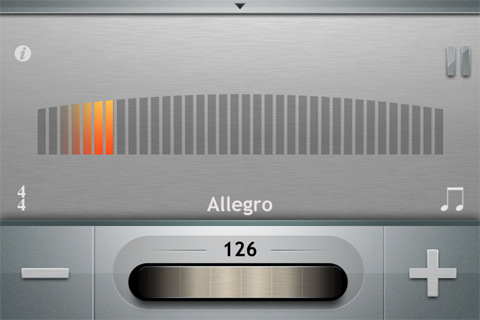
I recently had the pleasure of downloading the Metronome Plus app, and let me tell you, it's amazing. Developed by President's Own Marine Band clarinetist, Joseph LeBlanc, it is truly spectacular. There is no other metronome app in the app store that is as simple to use, visually appealing, and feature packed. And for the special release price of $0.99, you can't go wrong!

The interface is very nice and easy to use and understand. The center is bar with a moving line gives a visual representation of the beat. On the bottom part of the screen is a large scroll wheel which makes tempo adjustments quick and painless. And the tempo range is massive going from 30 - 300 BPM. It also gives a text example of the tempo, such as allegro, moderato, etc. 

A simple swipe of the finger reveals many more options. This allows you to choose which beats to accent, rhythmic patterns, and different time signatures. It even offers four choices for the metronome sound (digital being my favorite). This app also boasts the loudest metronome sounds available for the iPod/iPhone/iPad. This makes it great during practice sessions as it can actually being heard over the sound of the instrument.

All in all, I think this is best metronome app around. It has the cleanest interface, the simplest adjustments, the most options, and the loudest sounds. And again, you can get it for only $0.99! If you don't own this app, make sure to download it. You won't regret it.  


Thursday, May 5, 2011

Interview with Phil Rovner: Ligatures, Acoustics, and More.


Phil Rovner, the man behind the world-famous Rovner Ligatures, was kind enough to answer some questions for us. We found the information very interesting and helpful. I hope you all do as well!


Rovner Website


Q. What first got you interested in the design of ligatures? 
A. "What caused my interest in ligatures was a problem I was having learning to play tenor sax after 15 years of jobbing successfully on alto sax, clarinet and flute. I was having difficulty playing the tenor in tune. At my day gig as an engineer, I was working on a project that utilized material similar to what we currently use in our ligatures. I wondered what would happen if the ligature was made of that material instead of metal, and created one similar to our Dark model.It worked. My intonation improved dramatically, and the rest is history."

Q. What is the most enjoyable part of your job? 
A. "My passion is finding ways to further improve our ligatures' performance; it seems there is no end to making a ligature play better, and so it's an ongoing effort."

Q. What is the most difficult part of your job? 
A. "Currently, the toughest part of my job is finding the time to continue experimenting and engineering the latest designs, as so much of my time is involved with administrative, marketing, and keeping the production flowing smoothly."


Q. How much of an impact does a ligature have on the sound? 
A. "Although there are players who claim the ligature has little or no effect on tone and playability, I and many others find  that the ligature greatly influences all aspects of tone, intonation, and playability. A great percentage of our ligature sales are the result of school band directors who insist that a new class of clarinet and saxophone players use our ligatures, as the resultant improvement in the students performance is a significant factor in the school band's overall good sound and intonation."

Q. What are the pros and cons of rigid vs flexible ligatures? 
A. "The performance of a reed is heavily influenced by how much vibration takes place in the heel of the reed. A rigid ligature causes the vibrational energy to be reflected heavily back toward the reed's tip, thus increasing the contribution of the reed's resonance to the overall tone. A flexible ligature allows the energy to flow into the heel of the reed, where it can be dissipated, thus allowing the air column resonances to dominate the tone, and also to minimize the reed's vibration from tending to bias the pitch away from trueness."

Q. What is accomplished by different methods of reed contact? (i.e. the Bonade rails, the Harrison four points, etc.) 
A. "Every difference in a ligature's configuration will have an influence on tone, intonation, and playability, One drawback to ligatures which utilize pressure points is that as the reed is played the pressure points gradually dig into the reed, and the way  the reed plays changes as a result. In our latest generation of ligatures we are finding that supporting the reed along the edges of the heel of the reed elicits the performance that most players seem to prefer; and so we are experiencing an excellent customer response to our latest models."

Q. What part of the ligature affects the sound the most? (i.e. material, thickness, reed contact points, etc.)
A. "The entire ligature is embodied in it's performance. Any change to any part of the ligature will result in a perceptive change in it's performance. For instance, our Turbo Charger Kit, even though it installs on our Legacy and Star Series models on the ligature pins which are on the side of the mouthpiece opposite the reed, it makes the tone decidedly more solid and substantive."

Q. What kinds of things are you experimenting with for your future ligatures? 
A. "We are currently in the process of upgrading our latest generation of ligatures that use "Mass Loaded Technology" with a view towards making the products more cost effective, to make them more accessible to students as well as professional players."


Sunday, May 1, 2011

Online Music Dictionary Including Audio Examples of Pronunciations

During our time as musicians we are bound to come across a word that we are either unfamiliar with or that we are unsure of how to pronounce. Thanks to Virginia Tech's Multimedia Music Dictionary we can solve both of these problems. The online dictionary is free, simple to use, and contains almost any musical marking one will see. I am yet to find a marking that isn't in the online dictionary. It is extra useful because the audio clips for each entry provide a spot on pronunciation to use. This is an excellent resource and I hope you can fine it as helpful as I do.